You walk into a guitar store. The wall is covered in Les Pauls. Standard 50s. Standard 60s. Classic. Custom. Modern. Prophecy. They look nearly identical. The names tell you almost nothing. The price tags jump around with no obvious logic. You pick one up, put it down, pick up another. Twenty minutes later you leave with a headache and no guitar.
Here’s the thing — Epiphone’s catalog is genuinely confusing, and most buying guides make it worse by listing every model without explaining how they actually differ. That’s where this one starts.
Let’s also retire a tired framing while we’re at it. The story about Epiphone being Gibson’s “budget alternative” is incomplete at best. Epiphone has been building instruments for over 150 years. The Casino — one of the best Epiphone guitars ever made — was the choice of John Lennon and Keith Richards not because they couldn’t afford better, but because nothing else sounded quite like it. The Sheraton has been a working musician’s guitar for decades on its own merits. These instruments have a history that runs longer and deeper than the Gibson acquisition in 1957.
With that said, here are the best Epiphone guitars worth your attention right now — and what actually separates them.
The 8 Best Epiphone Guitars Right Now
Epiphone Les Paul Standard 50s
The Standard 50s is where most conversations about the best Epiphone guitars begin, and for good reason. It captures the round, warm character of the original 1950s Les Paul — the rounded C-profile neck, the slightly darker tone, the ProBucker pickups voiced to replicate the PAF humbuckers of that era. The result is a guitar with real sustain and body, the kind of tone that was made for classic rock and blues. If your frame of reference is the sound of early Clapton or the Allman Brothers, this is the version of the Les Paul you want. The 60s model, by contrast, has a slimmer neck profile and slightly brighter tone — same guitar, different feel and different voice. That distinction matters, and it’s one most buying guides gloss over entirely.
Epiphone Les Paul Custom
The Les Paul Custom is a different instrument from the Standard in more than just appearance. The ebony fretboard gives it a brighter attack with a tighter, more defined high end. The binding, the gold hardware, the split-diamond headstock inlay — none of that is purely cosmetic. Players who have owned both a Standard and a Custom consistently describe them as tonally distinct guitars that suit different playing situations. The Custom has traditionally been the choice for players who want clarity and presence rather than warmth and bloom. It also happens to be one of the best Epiphone guitars for players who want a stage instrument that looks serious under lights without spending Gibson Custom Shop money.
Epiphone Casino
Some guitars earn their reputation on specs. Others earn it on feel, on history, on the way they make you play differently the moment you pick them up. The Casino is the second kind.
The Casino is a fully hollow thinline — no center block — fitted with a pair of P-90 pickups. That combination produces something no Les Paul can replicate: a light, airy, slightly gritty tone with a natural feedback sensitivity that rewards players who know how to work with it rather than fight it. John Lennon played a Casino. So did Keith Richards, Gary Clark Jr., and Elliott Smith. This isn’t a Gibson ES-330 clone worn as a budget badge. It’s its own instrument with its own identity, and it’s one of the most genuinely distinctive best Epiphone guitars in the entire catalog — arguably across any price range.
Epiphone SG Standard
The SG is the guitar Gibson sometimes seems to forget it made, which makes the Epiphone version quietly fascinating. Lighter than the Les Paul, with a double-cutaway that gives easy access to the upper frets and a slightly more aggressive voice — the SG has always attracted players who find the Les Paul a bit too heavy and a bit too polite. Tony Iommi built the template for heavy music on an SG. Angus Young never left the stage without one. The Epiphone SG Standard delivers that character at a price that makes it genuinely accessible, with ProBucker humbuckers and a mahogany body that produces the thin, focused, cutting tone the SG is known for. For players who want a little more edge and a little less weight, it’s one of the best Epiphone guitars to reach for.
Epiphone Sheraton II Pro
The Sheraton occupies a particular position in the Epiphone lineup — it’s not a Gibson model reimagined at a lower price point. It’s an Epiphone original, a semi-hollow thinline with a center block, multi-ply binding, and a tonal character that sits between the full-bodied warmth of a hollow archtop and the controlled sustain of a solid body. It handles clean tones beautifully and responds well to light overdrive, which makes it unusually versatile across styles. Jazz, blues, indie, and classic rock all feel at home on a Sheraton. Players who’ve spent time with one tend to become unexpectedly loyal to it — it rewards playing rather than just delivering a predictable sound every time.
Epiphone ES-335
The best Epiphone guitars don’t ask you to compromise. They ask you to pay attention — because the difference between a good guitar and the right guitar is almost never about the name on the headstock.
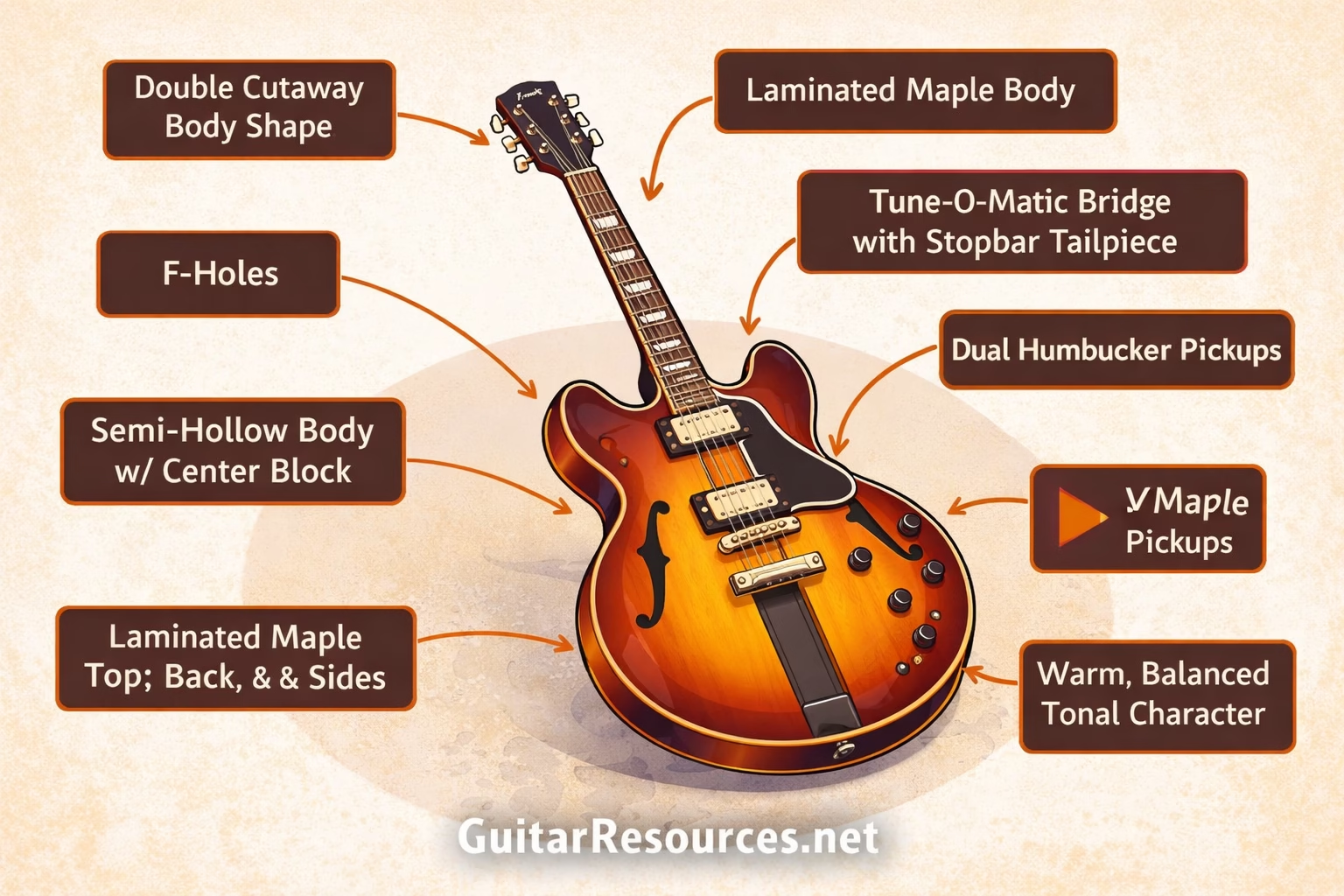
If the Sheraton is the Epiphone original, the ES-335 is the Gibson tribute done right. The semi-hollow construction, the center block, the dual humbuckers — it’s the architecture that B.B. King, Chuck Berry, and Alvin Lee built careers on. Epiphone’s version gives players the layered, complex tone of a semi-hollow without the Gibson price tag. Clean tones have a warmth and dimension that a solid body simply doesn’t produce. Pushed into overdrive, it retains clarity even at high gain — unlike a fully hollow guitar, which can become unruly in that territory. For blues and classic rock players, it’s one of the most complete best Epiphone guitars on the market.
Epiphone Les Paul Modern
The Modern sits in a different part of the catalog from the 50s and 60s Standards — it’s not a vintage recreation, it’s a contemporary tool. Coil-splitting via push-pull pots, a contoured heel for upper fret access, locking tuners, and an asymmetrical slim-taper neck profile that sits closer to a shredder’s instrument than a classic rock guitar. If you play anything that requires speed, extended range, or versatility across clean and high-gain tones, the Modern gives you options the vintage-voiced models don’t. It’s the version of the Les Paul built for the player who loves the platform but wants to push it somewhere the original design never intended to go.
Epiphone Masterbilt Texan
Every list of the best Epiphone guitars should include at least one acoustic, and the Masterbilt Texan earns its place without much argument. Full solid construction — solid Sitka spruce top over solid mahogany back and sides — at a price that makes competitors with laminate backs and sides look overpriced by comparison. The slope-shouldered dreadnought body produces a rich, woody tone with strong projection, and the 25.5-inch scale length gives the strings a focused, snappy response. Paul McCartney played an Epiphone Texan acoustic on the original recording of Yesterday. The modern Masterbilt version can’t claim that history, but it can claim the same basic idea: a serious acoustic guitar with genuine character, at a price that respects the player’s budget.
Over 150 years of instrument building doesn’t disappear because the name on the headstock changed hands. It shows up in the wood, the weight, and the way the guitar sounds when you stop thinking and just play.
How to Navigate the Lineup Without Losing Your Mind
The most useful thing to understand about Epiphone’s catalog is that the Les Paul alone comes in at least eight distinct configurations, and the names do very little to signal the differences. The 50s and 60s Standards are vintage-voiced instruments aimed at players who want classic humbucker warmth. The Custom is a step up in appointments and a tonal step toward brightness and clarity. The Modern is for contemporary players who want coil-splitting and a faster neck. The Prophecy sits at the top of the modern range with active Fishman Fluence pickups, built for high gain.
Outside the Les Paul family, the Original collection — Casino, Sheraton, Riviera — represents Epiphone’s own designs rather than Gibson reissues. These are the instruments that existed before the Gibson acquisition shaped the brand’s identity, and they carry a different kind of character because of it. If you want something that doesn’t feel like a Gibson at a lower price, start here.
One final note: a professional setup — adjusting the nut, action, and intonation — will transform any of these instruments. Most guitars, at any price, leave the factory set up for average hands on average guitars. A $50 setup makes a good Epiphone feel like a great one. Factor it in and don’t skip it.
References
Guitar World — Best Epiphone Guitars: Classic Les Pauls, Flying Vs and More


